Why does protein become more important after 40?
From your 40s, your body gradually begins to change. Hormonal shifts — particularly the decline in oestrogen towards menopause — have a direct influence on your muscles, bones and metabolism. One of the most underestimated consequences is sarcopenia: the gradual loss of muscle mass that begins around your 30s but noticeably accelerates after 40.
Without conscious intervention, you lose on average 3 to 8 percent of muscle mass per decade. That may not sound like much, but the effect is enormous. Less muscle mass means a lower metabolism, more fat storage (especially around your belly), a higher risk of osteoporosis and less strength in daily life. You notice it in simple things: shopping bags feel heavier, climbing stairs takes more effort, and you recover more slowly after exertion.
This is where protein comes in. Proteins are the building blocks of your muscles, and your body needs them continuously to repair and build muscle tissue. The problem is that after your 40s, your body becomes less efficient at using protein. Scientists call this anabolic resistance: your muscles respond less strongly to the same amount of protein than when you were younger. The result? You simply need more protein to achieve the same effect.
Key point: After 40, your body processes protein less efficiently. To maintain muscle mass and keep your metabolism up, you consciously need more protein than standard nutritional guidelines advise.
But protein does more than just protect muscles. It also plays a crucial role in your hormonal system (hormones are partly built from amino acids), your immune system, the transport of nutrients and the production of enzymes. Moreover, protein gives a longer feeling of fullness than carbohydrates or fats, which helps with weight management — something many women struggle with after their 40s.
How much protein do you need per day?
The official guideline for adults is 0.83 grams of protein per kilogram of body weight per day. For a woman of 70 kg that would amount to about 58 grams of protein per day. But a growing body of research shows that this is simply too little for women over 40.
Recent scientific insights advise women 40+ to aim for 1.2 to 1.6 grams of protein per kilogram of body weight per day. That is a significant difference. Let's make that concrete:
- Woman of 60 kg: 72 to 96 grams of protein per day
- Woman of 70 kg: 84 to 112 grams of protein per day
- Woman of 80 kg: 96 to 128 grams of protein per day
- Woman of 90 kg: 108 to 144 grams of protein per day
Aim for the lower end (1.2 g/kg) if you exercise little, and target the upper end (1.6 g/kg) if you do regular strength training (which is, incidentally, very advisable at this stage of life).
To put those numbers in perspective: a 150-gram chicken breast contains about 46 grams of protein. An egg contains approximately 7 grams. A portion of Greek yoghurt (200 grams) around 12 grams. If you honestly look back at what you ate yesterday, did you come close to 84 to 112 grams? Most women don't, and that is precisely the point.
Rule of thumb: Aim for at least 25 to 35 grams of protein per main meal. That is more than a single egg at breakfast or a small piece of meat at dinner.
The best protein sources for women 40+
Not all proteins are equal. The quality of protein depends on the amino acid profile, particularly the presence of leucine, the amino acid that most strongly stimulates muscle building. Women 40+ need at least 2.5 to 3 grams of leucine per meal to properly activate muscle protein synthesis.
Here are the best protein sources, ranked by protein content per 100 grams:
Animal sources:
- Chicken breast: 31 g protein
- Tuna (canned in water): 26 g protein
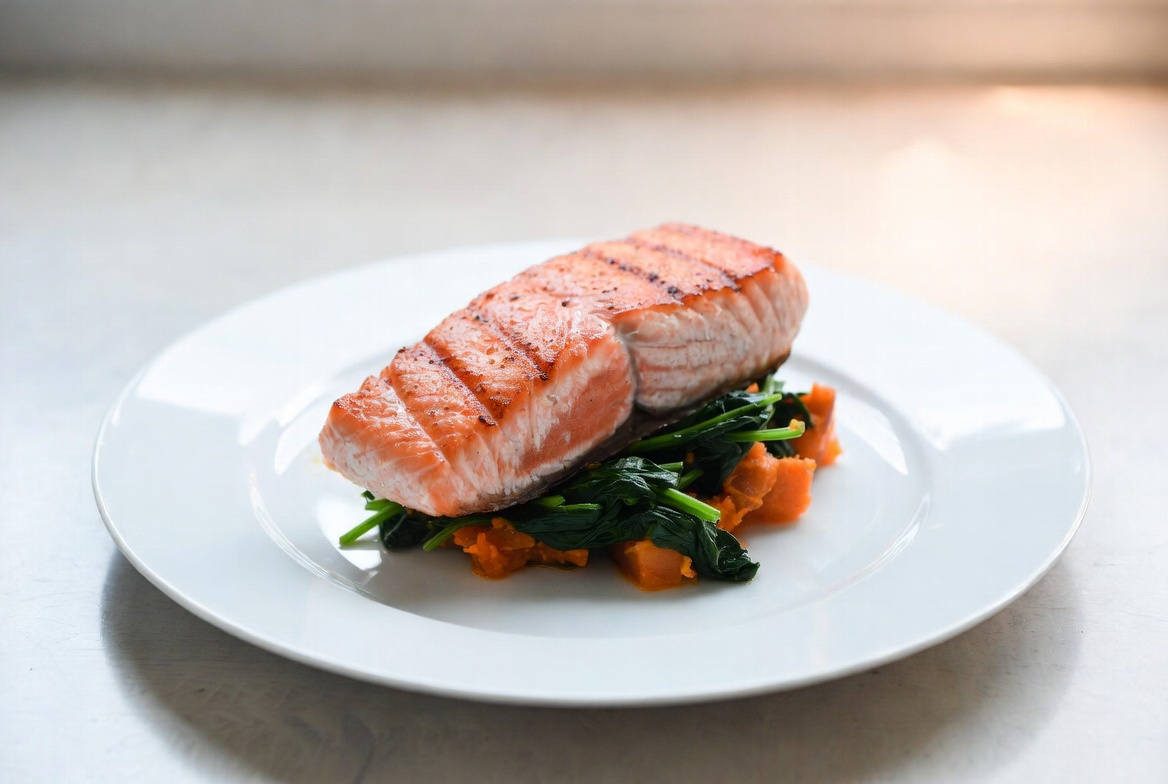
- Salmon: 25 g protein
- Low-fat cottage cheese: 12 g protein
- Greek yoghurt (10%): 6 g protein
- Eggs: 13 g protein (per 2 eggs)
- Cottage cheese: 11 g protein
- Prawns: 24 g protein
Plant-based sources:
- Tempeh: 19 g protein
- Lentils (cooked): 9 g protein
- Chickpeas (cooked): 9 g protein
- Tofu (firm): 15 g protein
- Edamame: 11 g protein
- Quinoa (cooked): 4 g protein
- Hemp seeds: 31 g protein
- Almonds: 21 g protein
Note: with nuts and seeds you also consume a lot of fats and calories. They are healthy, but not the most efficient way to meet your protein goal. Use them as a supplement, not as your main source.
Spreading protein throughout the day
At least as important as how much protein you eat is when you eat it. Your body can only effectively use a limited amount of protein per meal for muscle building: approximately 25 to 40 grams. Everything above that is digested, but contributes less to muscle protein synthesis.
That means it is not smart to consume all your protein at dinner (which many women do unconsciously). A much more effective strategy is to spread your protein evenly across three to four eating moments.
A common mistake is a carbohydrate-rich breakfast with little protein: bread with jam, a cracker with honey, or just a bowl of muesli. This way you start the day already behind on protein in a way that is difficult to catch up later.
Ideal distribution for 90 grams of protein per day:
Breakfast: 25–30 g | Lunch: 25–30 g | Dinner: 25–30 g | Optional protein-rich snack: 10–15 g
Start your day consciously with protein. Your muscles need building blocks after a night's sleep, and a protein-rich breakfast also provides a more stable blood sugar level and less appetite later in the day. Two eggs with a slice of salmon and a bowl of cottage cheese already bring you to 30 grams: a perfect start.
Plant-based vs. animal protein
There is much debate about plant-based versus animal protein, and the truth is nuanced. Animal proteins are generally complete: they contain all essential amino acids in the right proportions, including sufficient leucine. Plant-based proteins are often incomplete: they lack one or more essential amino acids or contain them in lower quantities.
That does not mean plant-based protein is bad. It does mean you need to be more deliberate about it. By combining different plant-based sources, such as legumes with grains or tofu with quinoa, you can put together a complete amino acid profile. You don't necessarily need to do this in one meal; spread over the day works too.
A practical disadvantage of eating purely plant-based is that you often need larger portions to get the same amount of protein. Whereas 150 grams of chicken breast gives you 46 grams of protein, you would need almost 500 grams of cooked lentils for the same amount. That is a considerable volume of food.
Our recommendation for women 40+: a flexible approach works best. Combine animal and plant-based protein sources. Eat fatty fish for the omega-3 fatty acids, dairy for the calcium, legumes for the fibre, and alternate with meat, eggs and soy products. This way you benefit from the advantages of both worlds.
Eating entirely plant-based? Then pay extra attention to your leucine intake and consider supplementing with a plant-based protein powder based on soy or pea protein, especially around breakfast.
Practical meal ideas
Theory is all well and good, but it needs to be workable in your daily life. Here are concrete meal ideas that easily help you reach your protein goal, without spending hours in the kitchen.
Breakfast (~25–30 grams of protein):
- Bowl of low-fat cottage cheese (250 g) with walnuts and fresh fruit (30 g protein)
- 3-egg omelette with spinach, feta and wholegrain toast (28 g protein)
- Overnight oats with chia seeds, protein powder and almond milk (27 g protein)
- Two eggs, slice of salmon, slice of wholegrain bread (26 g protein)
Lunch (~25–30 grams of protein):
- Salad with grilled chicken breast (120 g), avocado and chickpeas (35 g protein)
- Tuna salad sandwich (canned tuna in water) with egg (28 g protein)
- Lentil soup with a dollop of Greek yoghurt and wholegrain bread (25 g protein)
- Wrap with hummus, smoked chicken and vegetables (26 g protein)
Dinner (~25–35 grams of protein):
- Salmon fillet (150 g) with roasted vegetables and quinoa (32 g protein)
- Tofu stir-fry with broccoli, edamame and rice (28 g protein)
- Oven-baked chicken thighs with sweet potato and green beans (34 g protein)
- Prawns with wholegrain pasta, garlic and courgette (30 g protein)
Snacks (~10–15 grams of protein):
- Cottage cheese with cucumber and a little pepper (11 g protein)
- Hard-boiled egg with a handful of nuts (10 g protein)
- Protein shake with banana and peanut butter (20 g protein)
- Bowl of edamame with sea salt (11 g protein)
Tip: On Sundays, prepare a batch of hard-boiled eggs, a portion of chickpeas and some grilled chicken. That way you always have protein-rich building blocks ready during the week to quickly put a meal together.
The most important thing is that you keep it up. Perfection is not required, but consistency is. Start with small adjustments: add an egg to your breakfast, choose cottage cheese instead of regular yoghurt, take a tin of tuna as your lunch. Within a few weeks you will notice the difference: more energy, fewer cravings, and a stronger feeling in your body.